How to Master Physics, Progression, and Precision in Horsey Game
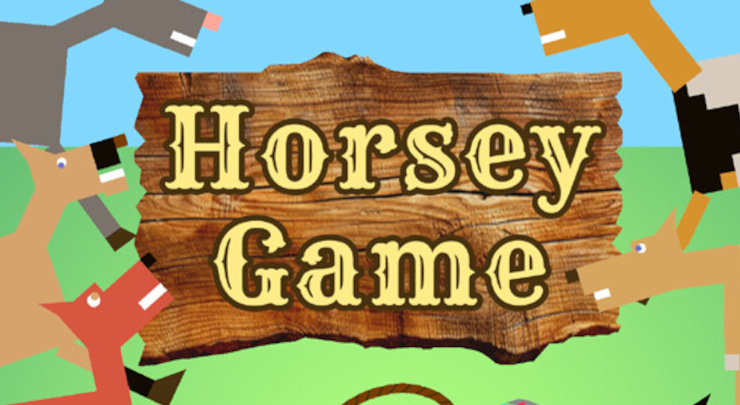
Horsey Game has captured the attention of the indie gaming community by blending physics-based platforming with arcade-style timing precision. Unlike traditional side-scrolling games where movement inputs translate into instant velocity, Horsey Game utilizes a strict momentum-accumulation engine. Every stride, jump, and landing requires an understanding of mass, kinetic energy retention, and environmental friction. Players must navigate a high-stakes trail littered with dynamic hurdles, water hazards, and escalating terrain elevations that punish mistimed button releases with disastrous wipeouts.
To master Horsey Game, you must look past its deceptively simple aesthetics and treat it as a disciplined study in kinetic geometry. Winning requires shifting your focus from frantic button-mashing to executing a calculated sequence of rhythm-based strides. This manual functions as your step-by-step masterclass, guiding you through the exact operational mechanics, gear progression pathways, and hazard navigation strategies required to transform a clumsy colt into an unstoppable grandmaster.
1. How to Understand the Core Stride and Momentum Engine
The absolute foundation of success in Horsey Game is mastering the primary stride mechanic. Movement is governed by a dual-phase execution cycle: the Compression Phase and the Extension Phase. When you hold down the primary movement input, your horse model compresses its limbs, storing potential elastic energy. Releasing the input triggers the extension, converting that stored energy into horizontal and vertical velocity vectors.
The Physics of Kinetic Accumulation
If you hold the input for too long, your horse over-compresses, suffering an optimization penalty that drops your kinetic output to zero and leaves you stationary. Conversely, tapping the button too rapidly prevents the horse from gathering enough power to clear even basic flat terrain. You must train your muscle memory to identify the visual sweet spot—the exact frame where the horse's haunches drop to their lowest stable threshold—before releasing the input.
The Three Phases of a Perfect Stride
- The Compression Anchor: Press and hold the input as the horse's front hooves touch the turf, initiating the power-gathering sub-routine.
- The Apex Release: Let go of the input the exact millisecond the horse's core model flashes with a subtle white tension indicator.
- The Extension Glide: Allow the horse to fully extend its stride through the air, completely avoiding secondary inputs until the rear hooves clear the ground.
2. How to Execute Perfect Jump Mechanics and Launch Angles
Jumping in Horsey Game is not a separate action, but a direct mechanical evolution of your forward stride. To launch your horse into the air, you must modify your release timing relative to the terrain's local incline angle. The game engine calculates your trajectory by combining your current horizontal velocity with the vertical angle of the terrain at the exact point of release.
Decoupling Altitude from Distance
Achieving a long jump requires a completely different compression profile than achieving a high jump. For maximum horizontal distance over large chasms, you need to release your input slightly early while moving down a slope to flatten your trajectory arc. For maximum vertical clearance over high brick walls, you must hold your compression until the absolute peak of an uphill slope, redirecting your accumulated kinetic energy straight upward.
Jump Execution Metrics
- The Flat Launch (Forty-Five Degrees): Ideal for standard hurdles; executed by releasing the input precisely halfway through a standard stride on level ground.
- The Long Chasm Clearance (Fifteen Degrees): Ideal for crossing broken bridges; executed by carrying high velocity off a downhill slope and releasing early.
- The Wall Climb (Eighty Degrees): Ideal for massive vertical cliffs; executed by delaying the release until the front hooves physically begin to leave the upward incline.
3. How to Control Landing Impact and Prevent Speed-Killing Stumbles
What goes up must come down, and in Horsey Game, how you land is just as critical as how you launch. When your horse is airborne, its physical state machine enters a vulnerability window. If your horse hits the ground while your character model is tilted too far forward or backward, the engine registers a stumble, instantly erasing your accumulated speed and inflicting a severe durability penalty on your gear.
The Art of the Level Landing
To execute a flawless landing that preserves one hundred percent of your forward momentum, you must align the horse's structural axis with the slope angle of the receiving ground. If you are landing on a downhill slope, your horse must be pitched downward; if landing on an uphill slope, the nose must be lifted.
Step-by-Step Momentum Preservation Loop
- Identify the Drop Zone: Track the descending arc of your jump and identify the exact patch of ground your horse will make contact with.
- Adjust Air-Rotation: Use your secondary directional inputs to rotate your horse's spine until it runs perfectly parallel to the landing surface.
- Buffer the Next Stride: The exact microsecond the first hoof touches the ground, press and hold the compression input to instantly absorb the impact force and translate it into the next stride.
4. How to Navigate Early-Game Biomes: The Green Meadow Trails
The opening stages of Horsey Game take place in the Green Meadow Trails, an environment explicitly designed to test your baseline timing mechanics. The hazards here are primarily static, featuring low wooden fences, shallow dirt ditches, and gentle rolling hills. While this area is highly forgiving, rushing through it without optimizing your movement loops will leave you financially underprepared for the mid-game difficulty spike.
Optimizing Your Farming Efficiency
The Green Meadow Trails are highly lucrative due to the dense placement of bronze and silver horseshoes, the primary currency used to purchase gear upgrades. Instead of focusing purely on reaching the finish line quickly, you should use these early runs to practice your micro-adjustments and maximize your coin collection metrics.
Early-Game Progression Milestones
- Unlock Tier Two Horseshoes: Prioritize upgrading your horseshoes to increase the passive coin-attraction radius, ensuring you pick up items without breaking your racing line.
- Master Fence Splitting: Practice jumping over consecutive wooden fences using a single, high-velocity leap to build comfort with long-distance trajectory planning.
- Stabilize Cash Reserves: Accumulate at least five thousand silver coins before purchasing entry permits for the next geographical zone.
5. How to Upgrade Your Gear Stack at the Equestrian Smithy
Once you have farmed sufficient currency from the early stages, you must immediately relocate to the main hub menu and access the Equestrian Smithy. Gear upgrades in Horsey Game are not cosmetic additions; they alter the core variables of the physics engine, shifting your baseline compression speed, maximum velocity caps, and landing shock absorption rates.
The Strategy of Statistical Allocation
A common mistake for advancing players is over-investing in pure speed upgrades while ignoring stability metrics. A blazing-fast horse is completely unmanageable if its grip rating is too low to handle tight corners or slippery mud hazards. You must build a balanced loadout that matches your current mechanical comfort level.
Gear Configuration Performance Profile
The upgrade paths at the smithy are split across three primary equipment categories, outlined in the table below:
Equipment Piece
Primary Variable Modification
Ideal Playstyle Alignment
Titanium Horseshoes
Increases global traction and cuts down on ice-slick sliding distances by forty percent.
High-precision hazard tracking and tight cornering sequences.
Pneumatic Saddle
Extends the air-rotation speed and softens the impact penalty of off-angle landings.
High-altitude platforming runs and aerial stunt optimization.
Reinforced Bridle
Visualizes the exact frame window of the maximum compression sweet spot on your screen.
Beginner progression adjustment and rhythm calibration.
6. How to Conquer Mid-Game Biomes: The Muddy Swamp Crossings
Entering the Muddy Swamp Crossings introduces a punishing layer of environmental friction modifiers that completely overwrite your learned timing patterns. In this swampy biome, the ground is divided into standard turf and deep mud patches. Stepping into the deep mud multiplies your surface friction variable by three, causing your horse to sink and instantly failing any active compression loops.
Bypassing Mud Friction via Aqua-Planing
To survive the Muddy Swamp Crossings, you must treat the deep mud zones as bottomless pits. You cannot run through them; you must fly over them. This requires you to plan your launch points well in advance, using the scattered islands of solid rock to anchor your high-velocity jumps.
[Solid Rock Anchor] --(Max-Power Jump)--> [Airborne over Mud Patch] --(Momentum Glide)--> [Rock Landing Platform]
If you are forced to make contact with a mud patch due to a bad launch angle, do not attempt a full stride. Instead, execute rapid, low-power micro-taps to flutter across the surface of the mire, sacrificing short-term speed to maintain forward positioning until you can reach stable ground.
7. How to Manage Stamina Consumption and Feed Rotations
As you advance into longer tracks, Horsey Game activates the Stamina Consumption Engine. Your horse possesses a finite energy reservoir that depletes continuously during active compression phases and high-velocity sprints. If your stamina pool drops to zero, your horse enters an exhausted state, reducing your maximum speed to a crawl and causing severe stumbles over basic obstacles.
Balancing Energy Expenditures
To maintain long-term operational liquidity on extended runs, you must strategically manage the food pickups spawned along the track. Apples restore instant stamina blocks, carrots provide a temporary velocity boost without increasing energy drain, and sugar cubes completely refresh your energy reserves at the cost of temporary handling instability.
The Optimal Feeding Rotation
- The Apple Buffer: Consume apples whenever your core stamina drops below fifty percent to maintain your baseline sprinting capabilities.
- The Carrot Sprint: Save carrot activations for long, unobstructed straightaways to maximize the distance gained from the speed boost modifier.
- The Sugar Cube Reset: Deploy sugar cube triggers immediately before entering massive uphill climbs, ensuring you have the raw energy required to sustain extended vertical compressions.
8. How to Conquer Late-Game Biomes: The Frozen Mountain Ridges
The final and most demanding stage of your journey is the Frozen Mountain Ridges. This biome combines sub-zero ice physics with violent, dynamic wind currents that actively push your horse across the screen. On these frozen trails, your baseline stopping distance is quadrupled, turning every single stride decision into a high-risk commitment that cannot be canceled or corrected.
Correcting for Lateral Wind Displacements
The wind hazards in the Mountain Ridges act as a continuous lateral force vector applied directly to your horse's bounding box. When your horse leaves the safety of the ground, the wind will carry it sideways mid-flight, drifting your landing trajectory away from your intended targets.
High-Altitude Survival Protocols
- Windward Angling: When launching into a crosswind, intentionally angle your jump trajectory fifteen degrees into the wind direction to offset the lateral air drift.
- The Ice Slide Slide-Cancel: When sliding out of control on an icy patch, press the compression input halfway down to drop your horse's center of gravity, artificially anchoring your position to the track.
- Utilize Snowdrifts: Target deep snowdrifts for heavy landings; while they slow your forward speed, they completely absorb off-angle impact penalties, preventing fatal stumbles.
9. How to Utilize Advanced Stunt Multipliers for High-Score Leaderboards
For players who want to dominate the global high-score leaderboards, simply finishing the track cleanly is not enough. You must weaponize the game's built-in Aerial Stunt Engine. When your horse is airborne during high-altitude jumps, executing rapid rotational inputs or directional flips generates style points that multiply your final run payout exponentially.
Balancing Risk and Style Rewards
Every trick executed adds a flat multiplier value to your current score combo chain. However, if you fail to complete the rotation and crash during the landing phase, the entire accumulated combo score is permanently erased.
The High-Tier Leaderboard Playbook
- Secure Maximum Altitude: Utilize a steep uphill launch pad to throw your horse into a maximum-height vertical trajectory arc.
- Execute the Double-Flip Sequence: Rapidly hold the rotation input to complete two full 360-degree flips before reaching the apex of your flight path.
- Trigger the Tail-Whip Flare: At the absolute peak of the jump, tap the secondary stunt button to execute a high-value flare animation, resetting the trick-decay timer.
- Stabilize for Core Recovery: Drop all stunt inputs ten frames before ground contact, allowing the physics engine to safely enter the level landing verification state.
10. How to Diagnostic Track Failures and Avoid Common Wipeout Traps
Even elite equestrian grandmasters suffer catastrophic failures on the path to optimization. To minimize your losses and maintain a high win-rate percentage, you must learn to diagnose your wipeouts analytically, identifying the exact software calculation error that triggered your failure.
The Anatomy of a Wipeout
Wipeouts are rarely random; they are almost always caused by a failure to account for overlapping hazard variables. For example, hitting a hurdle while simultaneously suffering from high wind drift creates a compound physics calculation that the engine resolves by triggering an unrecoverable tumble animation.
Troubleshooting Your Runs
- The Late Release Penalty: If your horse consistently face-plants into the front edge of hurdles, you are releasing your compression input four to five frames too late, missing your optimal launch window.
- The Over-Speed Drift: If your horse slides off the outer edges of winding corners, you are entering the turn with too much forward kinetic energy; deploy an early compression tap to act as a brake before entering the bend.
- The Stamina Lockout: If your horse stumbles on completely flat, level terrain without any active hurdles, check your energy interface—you have ignored your stamina depletion caps, forcing a physical exhaustion check.
Conclusion
Mastering Horsey Game is an incredibly rewarding journey that transitions from early frantic inputs to a state of absolute, rhythm-based mechanical dominance. By treating the game not as a casual arcade diversion, but as a precise physics-driven simulation of momentum conservation and kinetic geometry, you completely eliminate the element of chance from your runs. From your first tentative steps on the safe paths of the Green Meadow Trails to the high-scoring, adrenaline-fueled aerial stunts executed across the frozen peaks of the Mountain Ridges, every single stride you take must be backed by a calculated understanding of compression timing, trajectory vectors, and landing alignment. Once you decouple your playstyle from mindless panic and optimize your character's loadout and stamina consumption patterns, the boundaries of the track dissolve completely, allowing you to claim your permanent position at the pinnacle of the global equestrian leaderboards.